
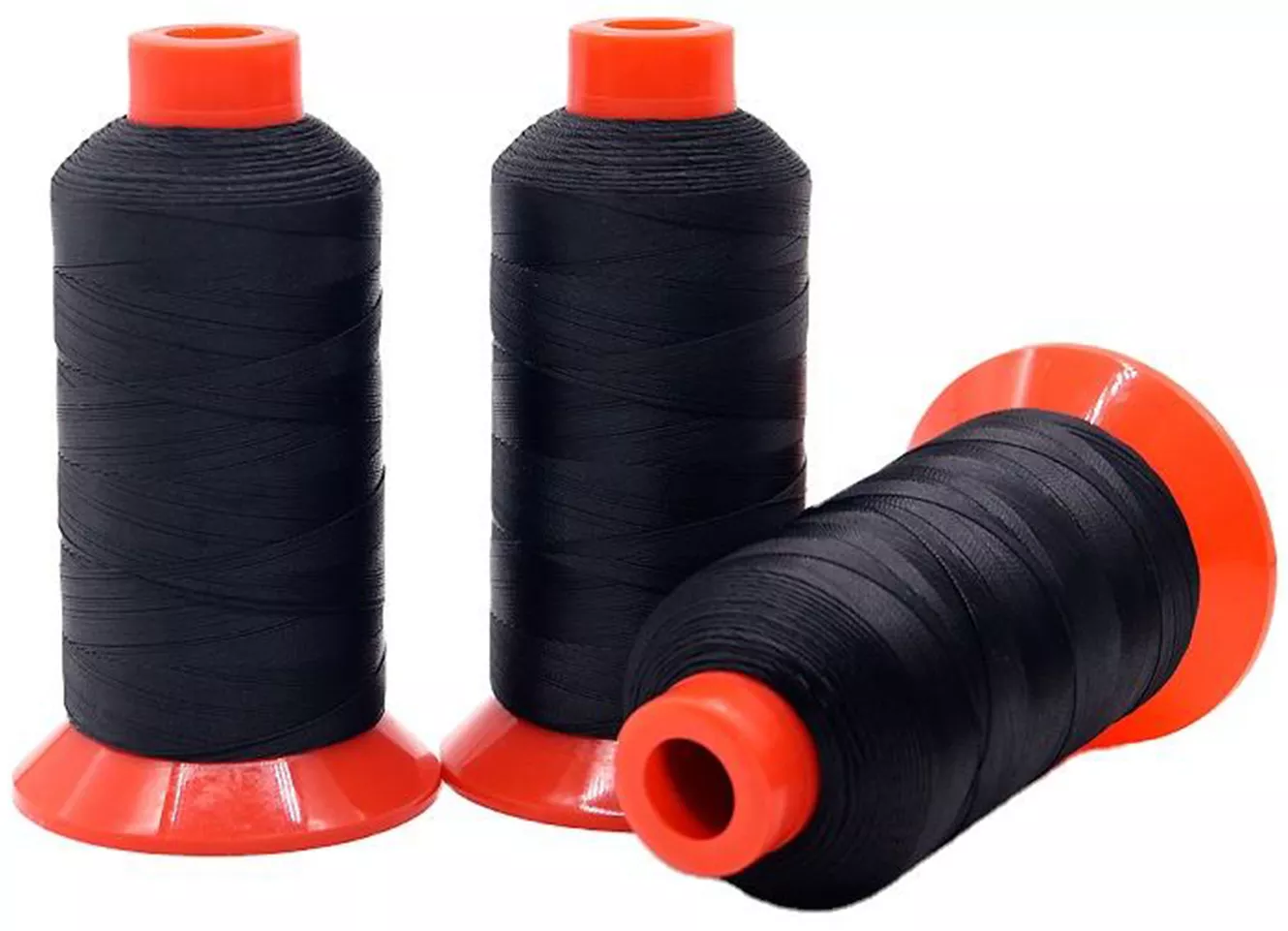
What Is Bonded Nylon Thread? The Complete Guide for Leather and Heavy-Duty Sewing
If you have ever watched standard thread shred into a bird’s nest at the needle eye during a heavy production run, you already know why bonded nylon exists.
Bonded nylon thread is the backbone of heavy-duty manufacturing. Whether you are stitching thick leather upholstery, marine canvas, or tactical outdoor gear, standard polyester simply cannot handle the friction. Bonded nylon is specifically engineered to survive the high heat and extreme tension of industrial walking foot machines without fraying or breaking.
The Anatomy of Bonded Nylon: Why It Survives Under Pressure
What actually makes the thread “bonded”?
It starts with continuous filament nylon 6.6 fibers. Instead of just twisting these plies together like standard apparel thread, manufacturers run the raw nylon through a specialized synthetic resin—often a liquid silicone wax blend. This process fuses the individual filaments into a single, smooth, cohesive strand.
This resin coating gives the thread a slightly stiffer feel and a protective armor. When the thread repeatedly passes through the needle eye and the material at high speeds, the bonded coating absorbs the friction, preventing the plies from separating and snapping.
Key Technical Properties
Feature Performance Capability Practical Benefit
Tensile Strength Exceptional Creates seams that can hold significant weight without bursting.
Abrasion Resistance Very High Withstands constant rubbing against hardware, zippers, and rough fabrics.
Moisture Resistance High Will not rot or degrade when exposed to damp environments.
Elongation Moderate Stretch Allows seams in footwear and seating to flex under load without snapping.
Crucial Distinction: While bonded nylon is incredibly strong, it is not impervious to prolonged, intense sunlight. If you are sewing sails or outdoor awnings that live outside 365 days a year, bonded polyester offers better UV resistance. For everything else, nylon wins on raw strength.
Primary Industry Applications
Because of its durability and smooth finish, bonded nylon is the industry standard for several demanding applications:
Leathercrafting: Ideal for assembling heavy leather bags, belts, wallets, and equestrian tack.
Automotive & Marine Upholstery: Strong enough to pull thick vinyl and leather tight over car seat frames.
Outdoor Gear: Perfect for stitching backpacks, tents, and heavy canvas where seam failure is not an option.
Footwear: Used extensively in shoe uppers and athletic footwear for flex and durability.

Expert Tips for Sewing with Bonded Nylon
Working with resin-coated thread requires slight adjustments to your machinery. If you are transitioning to a heavy thread like Tex 135 (Size #138), follow these guidelines to prevent skipped stitches and tension issues:
Match Your Needle Size: Heavy thread requires a larger needle groove. For Tex 135, you must use a 130/21 or 140/22 needle. Using a needle that is too small will strip the bonded coating right off the thread.
Adjust Upper Tension: Because the resin coating makes the thread thicker and slicker, it behaves differently as it passes through the tension discs. You will generally need to loosen your upper tension slightly compared to standard threads.
Machine Compatibility: Heavy bonded nylon is designed for industrial equipment (like the 0303 walking foot models). Standard domestic machines typically cannot handle threads heavier than Tex 70.
Secure the Ends: Nylon is slick. Always back-tack your seams carefully, and consider melting the trimmed ends with a thread zap or lighter to prevent unraveling.
Technical FAQ
Why does my bonded nylon thread keep shredding?
Thread shredding is almost always caused by a mismatch between the thread size and the needle size. If you are pushing a thick Tex 135 thread through a size 18 needle, the friction strips the bonding agent. It can also be caused by a microscopic burr on your machine’s sewing hook.
What is the difference between Tex 70, Tex 90, and Tex 135?
The “Tex” system measures the weight and thickness of the thread. Tex 69 (Size 69) is a medium-weight thread good for light upholstery and wallets. Tex 90 is heavier, often used for auto seating. Tex 135 (Size 138) is a heavy-duty thread used for thick leather goods, heavy canvas, and structural seams.
Can you dye bonded nylon thread?
Because the thread is coated in a synthetic resin, it does not absorb dye well after the bonding process. It is highly recommended to purchase the thread pre-dyed. Nexus offers 73 exact-match color variations to ensure a flawless blend with your materials.
a wide range of sewing projects
Bonded nylon thread is a strong, durable, and versatile option for a wide range of sewing projects. Its exceptional strength and abrasion resistance make it ideal for heavy-duty applications, while its smooth texture and variety of colors make it suitable for a variety of sewing tasks. By following some simple tips and techniques, you can make the most of bonded nylon thread and create durable, long-lasting sewing projects.
