
ABSTRACT
Sewing thread, as a key material connecting design and physical objects, plays an important role in various fields such as clothing, home furnishings, and industry. This article comprehensively explores the basic concepts, classifications, production processes, performance evaluations, market status, and development trends of sewing thread. Firstly, starting from the definition and function of sewing thread, the diversity of its materials and uses is elaborated in detail, including common materials such as cotton thread, nylon thread, polyester thread, and their applications in different fields. Subsequently, the production process of sewing thread was deeply analyzed, including key links such as raw material selection and processing, spinning and twisting technology, dyeing and post-treatment technology, etc., revealing the important role of technological progress in improving the quality of sewing thread. In terms of performance evaluation, this article introduces key evaluation indicators such as strength, wear resistance, washing resistance, and color fastness of sewing thread, and explores the similarities and differences of relevant standards at home and abroad, providing reference for the standardization development of the sewing thread industry. Finally, this article analyzes the market demand and consumption trends of sewing thread, reveals the evolution of market competition pattern, and looks forward to the future direction of technological innovation and industrial upgrading. Research indicates that environmental protection, sustainability, and intelligence will become important trends in the development of the sewing thread industry, driving the industry towards higher quality and efficiency.
Table of Contents
1-The basic concept and classification of sewing thread
1.1 Definition and function of sewing thread
Sewing thread, as the core element of the sewing process, carries the important task of firmly connecting different materials through stitching. It is not only the key to ensure the stability of the structure of the stitched goods, but also an important factor affecting the beauty of the product. In many fields such as clothing, home textiles and industrial products, sewing threads play a pivotal role as a bridge between design and physical objects.
In clothing production, the choice of sewing thread directly affects the quality and appearance of clothing. Different types of sewing thread are suitable for different fabrics and sewing needs. For example, for light and delicate fabrics, it is necessary to choose a thin and soft sewing thread to ensure smoothness and comfort after stitching; For heavy or rough fabrics, a thicker thread may be required to provide sufficient strength and durability. [1]
Sewing thread is also widely used in industrial production. For example, in the production of filter materials, PTFE sewing thread is widely used because of its excellent tensile properties and high temperature resistance. Through the study of PTFE sewing thread, it is found that its tensile properties and high temperature resistance have a significant impact on improving the service life and filtration effect of the filter material [2][3].
The quality and performance of sewing thread are also closely related to the quality of raw materials. Taking polyester sewing thread as an example, the quality of its raw material polyester fiber directly affects the strength, wear resistance and thermal stability of the sewing thread. Therefore, in the selection of thread making raw materials, the relationship between the internal structure of the fiber and the process conditions must be fully considered to ensure the final quality of the sewing thread [4].
In addition to the quality of raw materials, the production process of sewing thread is equally important. For example, the new process of sewing drum dyeing with double twist machine can effectively improve production efficiency and reduce energy consumption. This new process improves the overall quality of the product by optimizing the dynamic process to make the sewing thread more uniform and firm during the dyeing process [5].
Sewing thread plays an indispensable role in various fields. It is not only a bond connecting materials, but also a key factor in ensuring product quality and aesthetics. Therefore, when selecting and using sewing thread, its performance, quality and applicability must be fully considered to ensure that the quality of the final product meets the expected standard.
1.2 Material classification of sewing thread
The material of sewing thread is the key factor affecting its performance and use effect. In the sewing process, different materials of thread have different characteristics and scope of application, so understanding the material classification of sewing thread is crucial to choosing the right thread.
Common sewing thread materials mainly include cotton thread, nylon thread and polyester thread. Cotton thread, as a traditional sewing thread material, has been widely used in the field of garment production because of its good moisture absorption and air permeability. Especially in the need to ensure the comfort of underwear, children’s clothing and other clothing, the use of cotton thread is particularly common. Its natural fiber structure allows the cotton thread to easily pass through the fabric during sewing, reducing damage to the material while also providing a soft, skin-friendly touch to the stitched product.
Nylon thread is known for its high strength and wear resistance. In the need to withstand large tension and frequent friction occasions, such as outdoor clothing, sports shoes and other products, nylon thread has become the first choice. Its high strength characteristics make the stitched products able to withstand intense movement and long-term wear, while maintaining the original firmness. In addition, nylon thread also has good elasticity, can adapt to a variety of complex sewing needs.
Polyester thread is favored by high-end clothing brands because of its excellent wrinkle resistance and wash resistance. In high fashion, suits and other clothes that need to be kept clean and clean for a long time, polyester thread can effectively resist the erosion of wrinkles and stains, and maintain the beauty and quality of clothing. At the same time, polyester thread also has good heat resistance, can maintain stable performance under high temperature ironing, to meet the requirements of high-end clothing for fine technology.
In addition to the above three common sewing thread materials, there are other kinds of thread materials on the market, such as silk thread, hemp thread and so on. These threads also play an important role in specific sewing needs. For example, silk thread, with its good gloss and soft characteristics, occupies a place in the production of high-grade silk clothing; Hemp thread is popular in the field of ethnic fashion and handmade DIY because of its rough and natural style.
In the selection of sewing thread, in addition to considering the performance of the material, it is also necessary to consider the use of the stitched product, wearing occasions and cost. For example, in the production of daily wear clothing, you can choose cost-effective cotton or nylon thread; When making high-end clothing or sewing products with special needs, you may need to choose polyester thread or other special wire with better performance.
There are a variety of sewing thread materials, each material has its own unique properties and scope of application. It is of great significance to understand and master the characteristics and using skills of various threads for improving the quality and efficiency of sewing technology. When choosing sewing thread, comprehensive consideration should be made according to actual needs to ensure the beauty, firmness and comfort of the stitched product.
1.3 Purpose classification of sewing thread
Sewing thread, as a bridge connecting materials, plays a different role in different scenes. According to the use scenario of sewing thread, we can subdivide it into several categories such as clothing thread, home thread and industrial thread.
In the field of clothing, sewing thread is mainly used to connect various parts of clothing to ensure the firmness and beauty of clothing. Clothing line in the selection of clothing style, fabric and wearing needs to fully consider, in order to achieve a balance between beauty and comfort. For example, when sewing a high-end suit, it is necessary to choose a smooth and flexible sewing thread to ensure that the suit is crisp and comfortable; When sewing sportswear, it is necessary to choose wear-resistant and flexible sewing threads to adapt to various activities during sports.
Home line is more focused on practicality and durability. In the sewing of curtains, bed sheets, sofa covers and other household items, sewing thread plays a vital role. These lines need to withstand the wear and tension of daily use, so when choosing a line for home use, its wear resistance and strength should be prioritized. In addition, the color selection of home lines is also relatively rich to adapt to different styles of home decoration needs.
Compared to the clothing and home fields, industrial thread has higher requirements for strength and stability. In industrial production, sewing threads need to withstand greater tension and harsher environmental conditions. Therefore, industrial thread is usually made of high strength, high wear resistance materials, such as nylon or polyester. These threads play an important role in the manufacturing of products such as car seats, seat belts, industrial filter cloths, and more.
The application of sewing thread in different fields has its own focus, but no matter in which field, its quality and choice are directly related to the quality and service life of the product. Therefore, in the purchase and use of sewing thread, we should fully consider its use and needs to ensure that the purchase of the most suitable sewing thread. At the same time, with the continuous development of science and technology, the material and performance of sewing thread are also constantly improving and upgrading, providing more possibilities for various fields of application.
2-Production process and flow of sewing thread
2.1 Raw material selection and handling
The production of sewing thread begins with the careful selection of raw materials. This process is crucial because the quality of the raw material directly determines the quality of the final product. Raw materials are subjected to a series of rigorous screening procedures to ensure that their quality meets production standards. In the screening process, not only the obvious impurities and unqualified fibers should be removed, but also the key indicators such as the length, fineness and strength of the fibers should be strictly controlled [6][7][8].
In addition to screening, the raw material also needs to go through a pre-treatment stage to further improve its spinnability. Pretreatment includes but is not limited to cleaning, drying, mixing and other steps. Cleaning can remove oil and dust on the surface of raw materials, drying can ensure that the moisture content of raw materials is within the appropriate range, and mixing is to obtain more uniform fiber properties and lay the foundation for the subsequent spinning process [7][8].
In the process of raw material selection and treatment, it is also necessary to consider the sustainability and environmental protection of raw materials. With the improvement of consumers’ awareness of environmental protection, more and more sewing thread manufacturers have begun to pay attention to and use renewable and degradable raw materials to reduce the environmental impact in the production process [9]. Although these environmentally friendly raw materials may be slightly higher in cost than traditional raw materials, the long-term benefits and market competitiveness they bring can not be ignored.
With the progress of science and technology, the technology of raw material selection and treatment is also constantly innovative. For example, through the use of advanced testing equipment and technology, more accurate screening and evaluation of raw materials can be achieved; By improving the pretreatment process, the processing performance and product quality of raw materials can be further improved. These technological innovations have injected new impetus into the sustainable development of the sewing thread industry. [10][11][12][13][14]
The selection and treatment of raw materials is the key link in the process of sewing thread production. It directly affects not only the quality of the final product, but also the efficiency, cost and environmental sustainability of the production process. Therefore, manufacturers should attach great importance to this link and continuously optimize the process and technology of raw material selection and treatment to enhance product competitiveness and meet the changing market demand.
2.2 Spinning and twisting techniques
The technology of spinning and twisting is the key link in the production process of sewing thread, which has a vital influence on the quality and performance of sewing thread. Spinning is the process of processing raw materials into fibers, and its technical progress directly affects the fineness, strength and uniformity of fibers. In recent years, with the continuous progress of spinning technology, the quality of fibers has been significantly improved. For example, the use of advanced melt spinning technology can produce finer, more uniform fibers, which improves the smoothness and strength of the sewing thread.
In the spinning process, the raw material is heated and melted to form a fine filament through the spinneret hole. Spinning temperature, pressure, spinneret hole diameter and cooling conditions all affect the properties of the fibers. Optimizing these parameters can produce fibers with excellent properties and provide high-quality raw materials for subsequent twisting processes.
Twisting is the key step in combining multiple fibers into a single thread, which determines the tightness and firmness of the sewing thread. By optimizing the twisting process, such as adjusting parameters such as twist, tension and thread density, a tighter, more uniform sewing thread can be produced. In addition, the use of advanced twisting equipment and technology can also improve production efficiency and reduce production costs.
With the continuous development of science and technology, spinning and twisting technology is moving towards the direction of automation and intelligence. The application of automation technology can improve production efficiency and reduce the influence of human factors on product quality. The intelligent technology can ensure the stability of the production process and the consistency of the product by real-time monitoring and adjusting the production parameters.
The continuous progress of spinning and twisting technology has injected new vitality into the development of sewing thread industry. In the future, with the continuous emergence of new materials and new processes, we have reason to believe that the quality and performance of sewing threads will be further improved, providing a more solid foundation for the development of clothing, home, industry and other fields.
Environmental protection and sustainability have become a hot issue in the current society. In the research and development process of spinning and twisting technology, more and more enterprises are beginning to pay attention to the application of environmentally friendly materials and sustainable production processes. For example, using biodegradable materials as feedstocks or optimizing production processes to reduce energy consumption and waste emissions. These measures not only help to enhance the environmental image of enterprises, but also reduce production costs and improve the market competitiveness of products.
Spinning and twisting technology is the core technical link in sewing thread production, and its development level directly affects the quality and performance of sewing thread. With the advancement of science and technology and the improvement of environmental protection needs, spinning and twisting technology will continue to innovate and develop, injecting new impetus into the sustainable development of the sewing thread industry. At the same time, this will also provide strong support for the progress of clothing, home, industry and other fields. In the future development, we look forward to seeing more innovative technologies emerge to push the sewing thread industry to new heights.
2.3 Dyeing and post-processing techniques
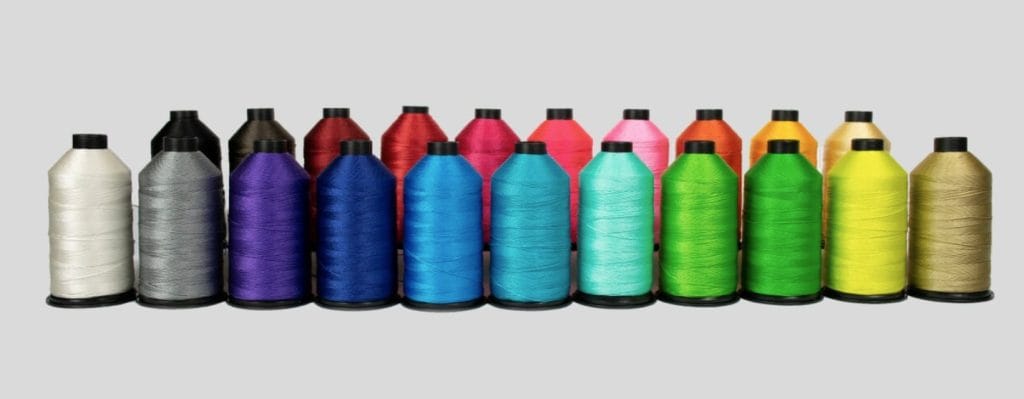
Dyeing plays an important role in the production of sewing thread, which is not only the process of giving the sewing thread color, but also the key step to improve its beauty and market competitiveness. Through the careful selection of dyes and dyeing processes, the sewing thread can show a rich variety of colors, so as to meet the diverse needs of consumers.
In the dyeing process, the choice of dye is very important. Different types of dyes have different characteristics, such as directness, reactivity, acidity or alkalinity, etc., which directly affect the effect and quality of dyeing. Therefore, when choosing dyes, factors such as the material of the sewing thread, the desired color effect and the fastness of dyeing must be fully considered. At the same time, the formulation of the dyeing process is also a complex and fine work, which involves the control of multiple parameters such as temperature, time, pH value to ensure the stability and repeatability of the dyeing process.
After dyeing, the sewing thread also needs to be post-treated, which is intended to remove floating color, improve color fastness and improve feel. The post-treatment technology includes many links such as color fixing, soap washing, water washing, etc. Each link needs to strictly control the conditions and time to ensure the best treatment effect. In particular, the color fixing treatment can significantly improve the color fastness of the sewing thread and reduce the risk of fading during use.
With the advancement of science and technology and the improvement of environmental awareness, dyeing and post-treatment technology is also constantly innovating and developing. New dyes and auxiliaries are emerging, making the dyeing process more environmentally friendly and efficient; At the same time, the improvement of post-processing technology has further improved the quality and performance of the sewing thread. For example, the use of low temperature plasma technology can improve the surface properties of sewing thread, improve its antistatic and wettability; The application of biological enzyme technology can degrade harmful substances in dyes and reduce environmental pollution.
The improvement of dyeing and post-treatment technology not only improves the appearance quality of sewing thread, but also has a positive impact on its physical and chemical properties. The optimized sewing thread has been significantly improved in terms of strength, wear resistance and washing resistance, so as to better meet the needs of different fields of use. Whether in the field of clothing, home or industry, high-quality sewing threads are a key factor in ensuring product quality and beauty.
Dyeing and post-processing technology plays an important role in the production of sewing thread. Through continuous technological innovation and improvement, we can look forward to greater breakthroughs and improvements in the future sewing thread in terms of color richness, color fastness, feel and environmental performance. This will inject new vitality into the development of the sewing thread industry and promote the continuous progress of related industries.
3-Performance evaluation and standard of sewing thread
3.1 Performance evaluation index of sewing thread
In the performance evaluation of sewing thread, strength, wear resistance, washing resistance and color fastness are the key evaluation indexes, which together constitute a comprehensive system to evaluate the quality of sewing thread.
Strength is the primary index to evaluate the performance of sewing thread. The sewing thread needs to withstand a certain tension during the sewing process to ensure the firmness of the sewn item. Therefore, the strength of the sewing thread is directly related to the use of the effect and durability. The high-strength sewing thread is not easy to break when it is subjected to greater tension, thus ensuring the stability and service life of the sewn item.
The wear resistance is an important index to measure whether the sewing thread can maintain good performance during long-term use. In the daily use of sewing goods, sewing thread will inevitably have friction with various materials, which requires that the sewing thread must have good wear resistance to resist the loss caused by friction and maintain the integrity of the sewing goods.
Washing resistance is also essential for sewing threads. Many sewn items, especially clothing and household items, often need to be washed to stay clean. In the washing process, the sewing thread needs to withstand the combined action of water flow, detergent and mechanical force, which requires that the sewing thread must have good washing resistance to maintain its stability and integrity in the washing process.
Color fastness is the key index to evaluate the color persistence of sewing thread. The color of the sewing thread has an important effect on the beauty of the sewn item. The sewing thread with high color fastness can keep the color bright and stable during use, and is not easy to fade or change color due to external factors, so as to ensure the beauty and long-term use effect of the sewn items.
Strength, wear resistance, washing resistance and color fastness are important indexes to evaluate the performance of sewing thread. These indicators are not only related to the use effect and durability of the sewing thread, but also directly affect the quality and aesthetics of the sewn items. Therefore, when selecting and using sewing thread, these performance indicators must be fully considered to ensure the quality of sewn items and meet the needs of use.
3.2 Performance evaluation methods and equipment
Sewing thread performance evaluation is a rigorous and complex process that relies on a range of professional experimental methods and high-precision equipment. These evaluation methods and equipment not only help us understand the physical and chemical properties of sewing thread, but also provide strong data support for production and use.
Tensile test is one of the important means to evaluate the performance of sewing thread. In this process, professional tension machines are used to stretch the sewing thread until it breaks. In this way, we can accurately measure the tensile strength and elongation at break of the sewing thread, so as to judge its durability and reliability during use. The results of tensile test are of great significance to guide the setting of technological parameters in the production process and the selection of suitable sewing thread by users.
The wear test is to simulate the wear that the sewing thread may encounter in the actual use process. Through the wear testing machine, we can observe the performance of the sewing thread under different wear conditions, and then evaluate its wear resistance. This indicator is particularly important for sewing applications that need to withstand long-term friction and wear, such as the manufacture of footwear, luggage and other products.
The washing test is to test the performance stability of the sewing thread during repeated washing. By using specialized washing equipment, we can simulate the state of the sewing thread after multiple washes, so as to judge its washing resistance. This performance indicator is crucial for clothing, bedding and other products that require frequent cleaning.
In addition to the above three main evaluation methods, other special tests may also be carried out according to actual needs, such as color fastness test, UV resistance test, etc. These tests need to be completed with the help of professional experimental equipment to ensure the accuracy and reliability of the evaluation results.
Performance evaluation methods and equipment play an important role in the research and production of sewing thread. They not only provide us with objective and accurate data support, but also provide a strong guarantee for the continuous improvement and optimization of sewing thread. By constantly improving the evaluation method and updating the equipment, we can better meet the market demand and promote the continuous development and progress of the sewing thread industry.
3.3 Comparison of domestic and foreign relevant standards
In the sewing thread industry, there are significant differences in the standards for product performance evaluation at home and abroad. These differences are not only reflected in the choice of assessment indicators, but also in testing methods, environmental requirements, and market access.
When the domestic standard is formulated, more consideration is given to the performance of the sewing thread in practical applications. Therefore, indicators directly related to the service life and stability of products, such as strength, wear resistance, and washing resistance, have received special attention. Such a standard system helps to ensure that the sewing thread products on the market can meet the basic needs of domestic consumers and industries, and also provides a clear quality improvement direction for enterprises.
Foreign standards are more comprehensive and detailed. In addition to the above practical indicators, foreign standards also increase the consideration of environmental protection and sustainability. For example, some European and American countries have begun to require sewing thread manufacturers to provide environmental impact assessment reports of products to ensure that their products meet environmental requirements throughout the life cycle. In addition, foreign standards also often put forward more stringent requirements on the source of raw materials, production processes and packaging materials of sewing thread, which undoubtedly increases the threshold of access to foreign markets.
This difference in domestic and foreign standards is both a challenge and an opportunity. For domestic sewing enterprises, in order to obtain a place in the international market, they must constantly improve their technical level and management capabilities to adapt to more stringent and diversified foreign standards. At the same time, through in-depth research and comparison of domestic and foreign standards, enterprises can also find new market opportunities and innovation points, so as to develop more competitive new products.
From a more macro perspective, the comparison of domestic and foreign standards also reveals the development trend of the global sewing thread industry for us. With the increasing awareness of environmental protection and the concept of sustainable development, the competition of the sewing thread industry in the future will not only be the competition of product performance, but also the competition of environmental protection and sustainability. Therefore, both domestic and foreign sewing thread enterprises need to keep up with the pace of The Times, constantly innovate and improve to meet the growing needs of global consumers and industries.
Nexus-the professional nylon bonded thread supplier
NEXUS – Professional Bonded Thread & Sewing Thread
NEXUS focuses on professional sewing thread, with Bonded Nylon 6.6 Thread as a core product line. We help customers compare thread material, Tex size, application requirements and product specifications using clearer product information and available technical evidence.
Our approach is based on Precision + Proof — making thread selection more precise and important product information easier to verify.
- Sale!

- 选择选项
本产品有多种变体。 可在产品页面上选择这些选项
Bonded Nylon Thread – Tex 70
评级 5.00 / 5,已有 1 位客户进行了评价
原价为:$17.80。$14.25当前价格为:$14.25。 - 选择选项
- Sale!
- 选择选项
本产品有多种变体。 可在产品页面上选择这些选项
Bonded Nylon Thread – Tex 90
评级 5.00 / 5,已有 1 位客户进行了评价
原价为:$17.80。$14.25当前价格为:$14.25。 - 选择选项
- Sale!
- 选择选项
本产品有多种变体。 可在产品页面上选择这些选项
Bonded Nylon Thread – Tex 135
评级 5.00 / 5,已有 3 位客户进行了评价
原价为:$17.80。$14.25当前价格为:$14.25。 - 选择选项
- Sale!
- 选择选项
本产品有多种变体。 可在产品页面上选择这些选项
Bonded Nylon Thread – Tex 207
评级 5.00 / 5,已有 1 位客户进行了评价
原价为:$17.80。$14.25当前价格为:$14.25。 - 选择选项