
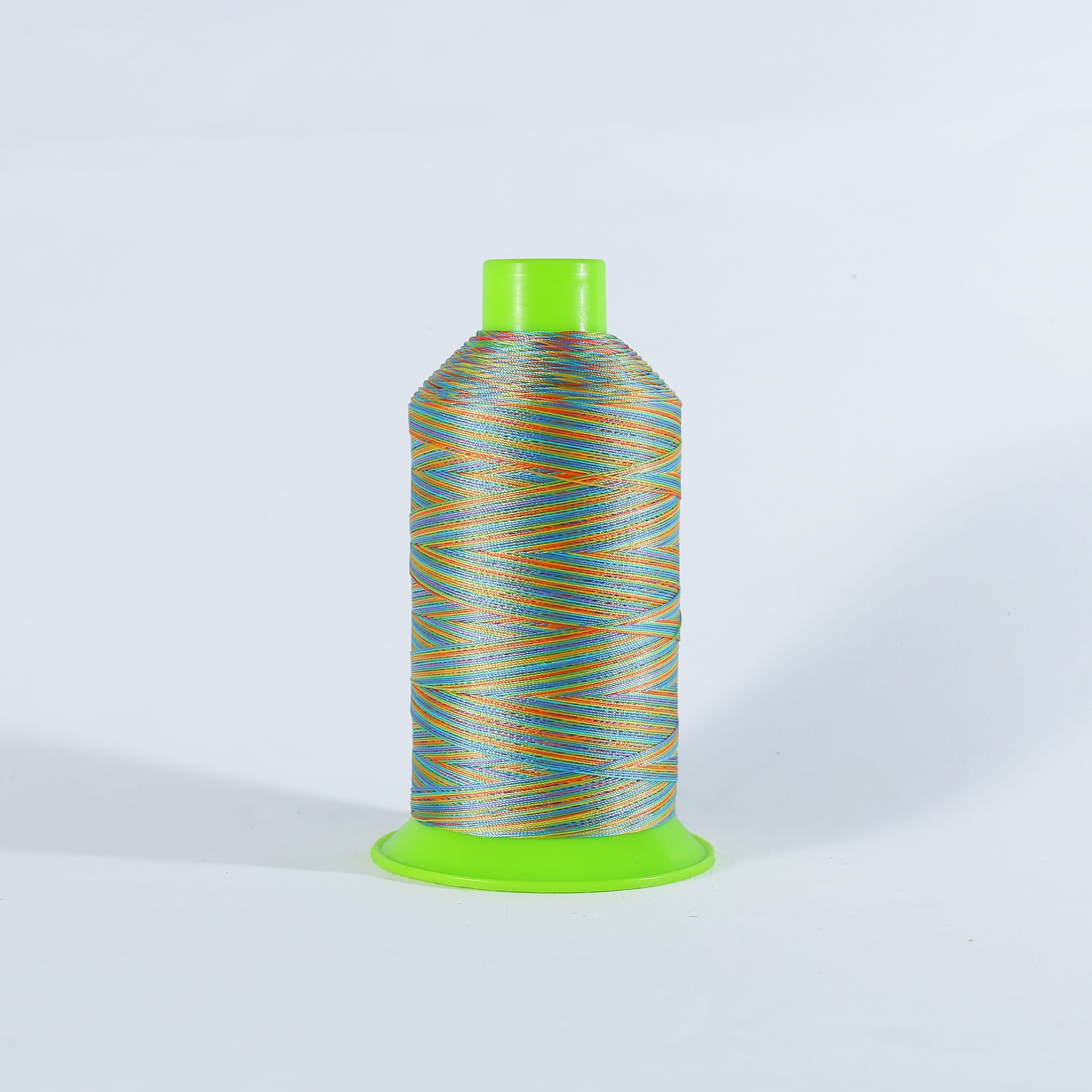
Bonded Nylon vs Polyester: Quick Answer
Bonded nylon is generally the better choice for high-strength, high-abrasion applications such as leatherwork, footwear and heavy-duty upholstery. Bonded polyester is usually better for outdoor, marine and UV-exposed applications because it offers better long-term resistance to sunlight and moisture.
The best choice depends on where the finished product will be used, how much abrasion the seam will face, and how much UV or moisture exposure is expected.
Bonded Nylon vs Polyester Comparison
| Feature | Bonded Nylon | Bonded Polyester |
| Tensile Strength | Typically higher for the same thread size | Strong, but generally lower than nylon of comparable size |
| Abrasion Resistance | Excellent | Very good |
| UV Resistance | Moderate; prolonged sunlight can reduce strength | Excellent; better for long-term outdoor exposure |
| Stretch | Higher elongation and better shock absorption | Lower stretch and greater dimensional stability |
| Moisture Resistance | Good | Excellent |
| Colorfastness | Good | Excellent, especially with prolonged UV exposure |
| Leather | Recommended | Suitable |
| Indoor Upholstery | Recommended | Suitable |
| Outdoor Upholstery | Limited for prolonged UV exposure | Recommended |
| Marine / Awnings | Not the first choice | Recommended |
| Best For | Leather, footwear, bags, automotive and high-abrasion sewing | Outdoor gear, marine upholstery, awnings and UV-exposed applications |
Bonded Nylon Thread:
Bonded nylon thread is a popular choice for sewing projects that require durability and strength. It is made from nylon fibers that have been chemically treated and bonded together. The bonding process improves abrasion resistance and helps the thread sew more consistently, but bonded nylon is still less UV-resistant than bonded polyester during prolonged outdoor exposure.
Why Industry Professionals Choose Bonded Nylon:
One of the main strengths of bonded nylon thread is its superior durability. It is known for its high tensile strength, meaning it can withstand heavy loads without breaking. This makes it an excellent choice for sewing items that will be subjected to a lot of stress, such as bags, backpacks, and outdoor gear.
Another strength of bonded nylon thread is its resistance to abrasion. The bonding process creates a protective barrier around the individual fibers, making the thread less prone to wear and tear. This makes it suitable for sewing projects that involve repeated friction, such as upholstery, leatherwork, and quilting.
Weaknesses of Bonded Nylon Thread:
Despite its many advantages, bonded nylon thread has certain drawbacks.
Another weakness of bonded nylon thread is its susceptibility to UV damage. Although the bonding process offers some UV protection, prolonged exposure to sunlight can still cause the thread’s strength to diminish over time. Consequently, it is not well-suited for outdoor projects that require extended exposure to direct sunlight.
Suitability of Bonded Nylon Thread:
Bonded nylon thread is best suited for sewing projects that require strength, durability, and resistance to abrasion. It is commonly used in applications such as outdoor gear, industrial sewing, leatherwork, upholstery, and heavy-duty bags. If you need a thread that can withstand heavy loads and rough handling, bonded nylon thread is an excellent choice.
Bonded Polyester Thread:
Bonded polyester thread is another popular option for a wide range of sewing projects. It is made from polyester fibers that have been treated and bonded together using a special coating. Like bonded nylon thread, bonded polyester thread offers several advantages in terms of strength, versatility, and colorfastness.
Best Factory Applications for Bonded Polyester:
One of the key advantages of bonded polyester thread is its exceptional resistance to chemicals and mildew. Polyester fibers are inherently hydrophobic, meaning they repel moisture and resist mold growth. This makes bonded polyester thread an ideal choice for sewing projects intended for use in humid environments, such as outdoor furniture and marine upholstery.
Another major advantage of bonded polyester thread is its colorfastness. Polyester fibers can be dyed in a wide range of colors and are resistant to fading, maintaining their hue even when exposed to sunlight or harsh chemicals. Consequently, bonded polyester thread is highly favored for projects requiring vibrant, long-lasting color, such as quilting, automotive seating, and outdoor awnings.
Weaknesses of Bonded Polyester Thread:
Despite its many strengths, bonded polyester thread does have some weaknesses. One of the main drawbacks is its lower tensile strength compared to bonded nylon thread. Polyester fibers are generally not as strong as nylon fibers, which means that bonded polyester thread may be more prone to breaking under heavy loads or stress.
Suitability of Bonded Polyester Thread:
Bonded polyester thread is well-suited for sewing projects that require resistance to chemicals, mildew, and color fading. It is commonly used in applications such as outdoor furniture, marine upholstery, swimwear, quilting, and decorative stitching. If you need a thread that offers vibrant colors, excellent colorfastness, and resistance to moisture, bonded polyester thread is a great choice.
Each has its own merits
Both bonded nylon and bonded polyester threads have their own strengths and weaknesses, making them suitable for different types of sewing projects. Bonded nylon thread excels in durability, strength, and resistance to abrasion, making it ideal for heavy-duty applications. On the other hand, bonded polyester thread offers excellent resistance to chemicals, mildew, and color fading, making it a great choice for projects that require vibrant colors and moisture resistance.
Ultimately, the best choice between bonded nylon and bonded polyester thread will depend on the specific requirements of your sewing project. Consider factors such as the materials being sewn, the expected stress and wear on the seams, and the desired colorfastness and flexibility. By choosing the right thread for your project, you can ensure that your finished piece is not only beautiful but also long-lasting and durable.
Which thread is stronger: bonded nylon or bonded polyester?
For the same thread size, bonded nylon generally offers higher tensile strength and greater elongation than bonded polyester. This makes nylon a strong choice for leatherwork, footwear, bags and other applications where seams must absorb repeated stress and abrasion.
Bonded polyester is also strong, but its main advantage is better long-term performance under UV exposure, moisture and outdoor conditions.
Which Thread Has Better Abrasion Resistance?
Bonded nylon generally offers excellent abrasion resistance, making it especially suitable for leather, footwear, bags and other applications where the thread repeatedly rubs against dense or rough materials.
Bonded polyester also provides good abrasion resistance, but nylon is usually preferred when friction and seam wear are the primary concerns.
Which Thread Has More Stretch: Nylon or Polyester?
Bonded nylon generally has greater elongation than bonded polyester, allowing the seam to absorb more shock and movement before breaking. This can be useful in leather goods, bags, footwear and other applications exposed to repeated stress.
Bonded polyester has lower stretch and better dimensional stability, which is useful when you want the seam to remain more stable under long-term outdoor or structural use.
Which Thread Performs Better Against Moisture, Mildew and Fading?
Bonded polyester generally performs better in wet, humid and sun-exposed environments because polyester absorbs very little moisture and offers strong resistance to mildew and color fading.
Bonded nylon also handles moisture well in many indoor and heavy-duty applications, but polyester is usually the better choice when long-term exposure to humidity, sunlight or outdoor weather is expected.
Which Thread Is Better for Leather?
Bonded nylon is usually the preferred choice for leather sewing because of its high tensile strength, excellent abrasion resistance and ability to absorb repeated seam stress. It is widely used for leather bags, footwear, belts, wallets and other heavy-duty leather goods.
Bonded polyester can also be used for leather, especially when the finished product will face prolonged sunlight, moisture or outdoor exposure.
Which Thread Is Better for Upholstery?
For indoor upholstery, bonded nylon is often the better choice because of its high strength, abrasion resistance and ability to handle repeated seam stress. It works well for furniture, automotive interiors and other high-wear applications.
For outdoor upholstery, bonded polyester is usually preferred because it offers better long-term resistance to UV exposure, moisture and color fading
How to Choose Between Bonded Nylon and Bonded Polyester
Choose bonded nylon when strength, abrasion resistance and seam flexibility are the main priorities. It is usually the better fit for leather goods, footwear, bags, indoor upholstery and other high-wear applications.
Choose bonded polyester when the finished product will face prolonged sunlight, moisture or outdoor weather. It is generally the better option for marine upholstery, awnings, outdoor furniture, tents and other UV-exposed applications.
If you choose bonded nylon, the next step is selecting the correct thread size for your material, machine and seam strength requirements.
If You Choose Bonded Nylon, Which Size Do You Need?
The right bonded nylon thread size depends on the material thickness, seam strength and sewing machine setup. Lighter applications may use Tex 70 or Tex 90, while heavier leather, upholstery and industrial sewing may require Tex 135, Tex 207 or Tex 270.
Compare our bonded nylon thread sizes to find the best match for your project.
Which Thread Is Better for UV Resistance and Outdoor Use?
Bonded polyester is generally the better choice for outdoor, marine and other UV-exposed applications because it retains strength and color better during prolonged exposure to sunlight and moisture.
Bonded nylon can still perform well in many heavy-duty applications, but extended UV exposure can gradually reduce its strength. For outdoor upholstery, awnings, marine projects and equipment covers, bonded polyester is usually the safer long-term choice.
Frequently Asked Questions (FAQ)
Can I use bonded nylon thread for outdoor cushions?
It is not recommended. Bonded nylon degrades and loses strength when exposed to prolonged UV rays. For outdoor cushions, marine upholstery, or sails, bonded polyester is the industry standard.
What does “bonded” mean in sewing thread?
Bonded thread is treated so the filaments stay together during sewing, helping reduce fraying, improve abrasion resistance and produce more consistent stitching.
Is bonded nylon thread UV resistant?
Bonded nylon has some UV resistance, but prolonged sunlight can gradually reduce its strength. For long-term outdoor or marine use, bonded polyester is usually the better choice.
