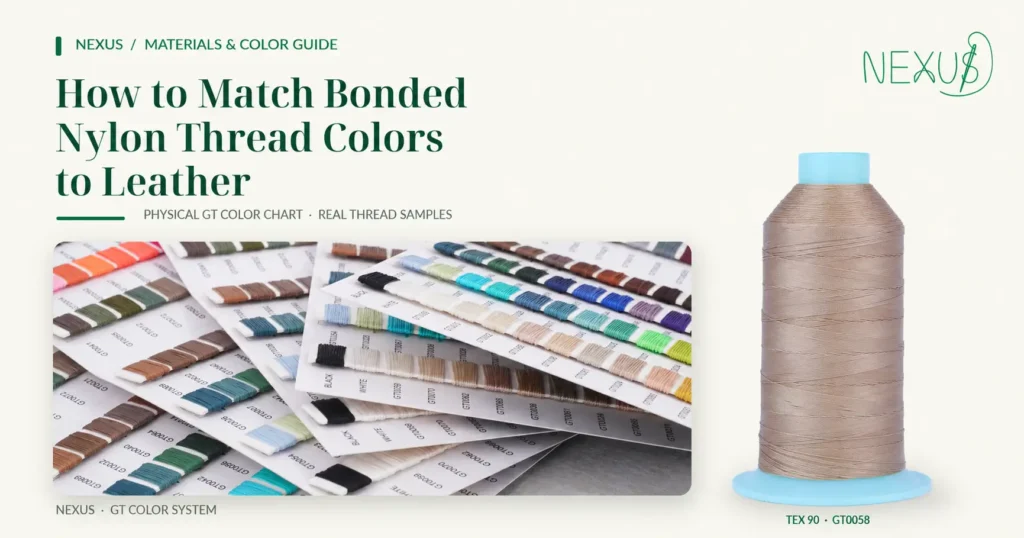
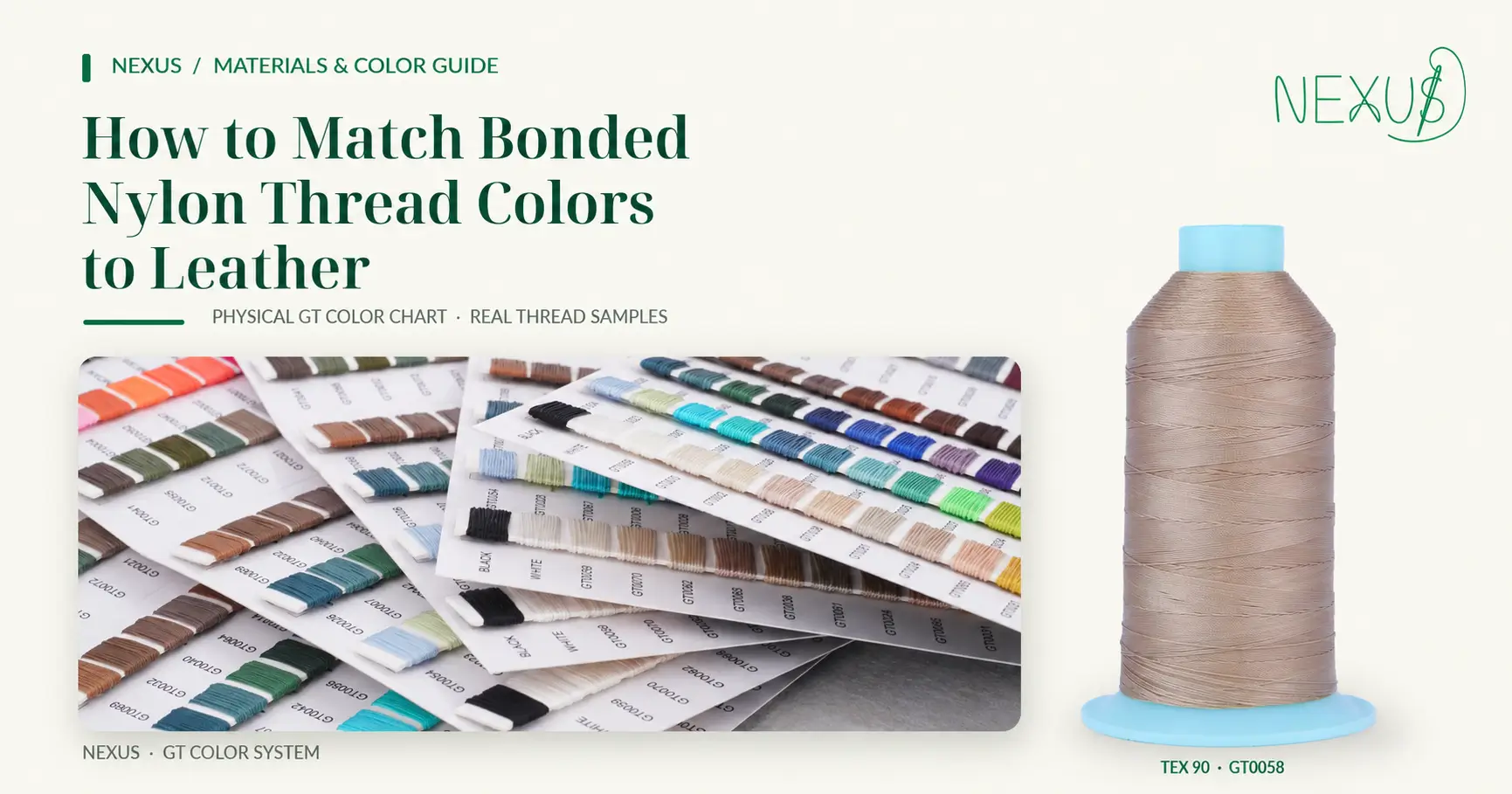
To match bonded nylon thread colors to leather, start by deciding how you want the stitching to look. A close color match can help stitches blend into the material, while a contrasting color can make the stitching a defining design feature.
But matching thread to leather is not always as simple as choosing a similar-looking shade from an online photograph. Leather finishes, screen settings, lighting conditions, and differences between thread batches can all affect how a color appears.
This guide explains how to compare physical color references, check real thread samples, and confirm your selection before placing an order.
1. Decide How You Want the Stitching to Look
Before comparing thread colors, decide whether the stitching should blend with the leather or stand out.
There are three common approaches.
Matching Thread Colors
Matching thread is intended to create a more subtle appearance by choosing a shade close to the leather surface.
A brown leather panel, for example, may be paired with a brown thread from a similar color family.
However, two shades that look nearly identical in a photograph may appear different when placed next to each other.
Best practice: Compare actual thread and leather samples before choosing a final color.
Contrasting Thread Colors
Contrasting stitching is intentionally visible.
The contrast may come from differences in brightness, color family, or both.
For example, light-colored thread against dark leather can create a clearly defined stitch pattern.
When selecting a contrasting color, consider how the thread will appear after sewing rather than judging the spool alone.
Tonal Thread Colors
A tonal approach uses a thread from the same general color family as the leather but with a deliberate difference in lightness or shade.
This can create a visible stitch without the stronger visual contrast of an entirely different color.
There is no single correct approach. The choice depends on the design, thread size, material appearance, and desired result.
2. Why Thread Colors Look Different on Screens
Online color selection is convenient, but photographs and digital displays have limitations.
Even when a product photograph is taken from a real thread spool, its appearance can vary between devices.
Several factors contribute to these differences:
- Screen settings: Brightness, contrast, and display calibration can change the apparent color.
- Lighting: The same thread may appear different under daylight and artificial lighting.
- Leather finish: Surface texture, gloss, and finish can influence how nearby colors are perceived.
- Photography conditions: Camera settings and lighting can affect the image customers see.
- Color proximity: A shade may look suitable in isolation but appear noticeably different when placed directly against leather.
A product photograph is therefore useful for narrowing down options, but it should not automatically be treated as an exact physical color reference.
For projects where color matching is important, a physical thread sample or color chart provides a better basis for the final decision.
3. How to Use a Physical Thread Color Chart
A physical color chart helps buyers compare available thread shades using actual color references rather than relying entirely on a screen.
NEXUS uses its GT color system for Bonded Nylon 6.6 Thread. BLACK and WHITE are maintained as separate basic colors outside the numbered GT series.
Explore the NEXUS Bonded Nylon Thread Color Chart
Step 1: Identify Your Leather Color Family
Start by identifying the general appearance of your leather.
For example, a material may fall within a brown, tan, black, grey, or another color family.
This first step reduces the number of thread shades you need to compare.
Step 2: Compare Physical Color References
Place the thread color reference close to the actual leather material.
Look for differences in hue, lightness, and the overall visual relationship between the two surfaces.
Do not rely on the color name alone. Two colors may share a similar name while appearing different when compared physically.
Step 3: Check the Color Under Consistent Lighting
Evaluate the colors under consistent lighting conditions.
If your finished product will be viewed under particular lighting, it may also be useful to examine the combination in that environment.
NEXUS uses D65 standard lighting as part of its normal color inspection process. Additional lighting requirements for a specific project should be communicated and confirmed separately.
Step 4: Record the Exact Thread Color Code
Once you identify a suitable shade, record its official color code together with the thread material and size.
For example, a complete selection record might include:
- Material: Bonded Nylon 6.6
- Thread size: Tex 90
- Color: Selected GT code
- Intended application: Machine-sewn leather goods
Recording the complete product specification helps reduce confusion when ordering additional spools or requesting the same shade later.
Important: A color code does not by itself confirm that every thread size is currently available in that color. Check the selected size and stock before ordering.
4. Why You Should Check Thread Color on the Actual Material
A thread color can look different as a wound spool, as an individual strand, and as a finished line of stitches.
The visual result can also change depending on the selected Tex size, stitch length, and leather surface.
For this reason, buyers should consider the complete sewing result rather than treating color as an isolated decision.
A practical evaluation process is:
- Select the desired thread material and size.
- Narrow down the color options using a physical reference.
- Place an actual thread sample against the leather.
- If possible, make a short trial seam using the intended material and sewing setup.
- Check the stitched result under relevant lighting before confirming a production quantity.
This process is especially valuable when matching a specific pre-dyed leather shade or developing a repeatable product design.
It also helps separate two different questions:
Does the selected thread color look right?
And:
Does the selected thread size work for the sewing application?
Both should be checked before final approval.
For help with thread sizing, see our Bonded Nylon Thread Selection Guide.
5. What If No Standard Thread Color Matches Your Leather?
Sometimes, an available stock shade is close but does not meet the intended appearance.
Rather than choosing an unsuitable color, buyers can consider a custom-color request.
NEXUS supports custom colors for its Bonded Nylon 6.6 Thread sizes, subject to confirmation of the requested specification and color reference.
Customers can provide a physical sample, an image, or a Pantone reference as an initial matching basis.
When only an image is available, a physical color sample must be prepared and confirmed by the customer before proceeding with formal production.
NEXUS Custom-Color Ordering Guidelines
| Item | Current Policy |
|---|---|
| Minimum order | 10 spools of the same size and custom color |
| Additional customization fee | USD 50 |
| Standard lead time | 10 days |
| Urgent order option | Dispatch may be arranged on the third day after order confirmation |
| Accepted starting references | Physical sample, image, or Pantone reference |
| Returns | Custom-color products are non-returnable |
Final availability and urgent-order arrangements should be confirmed for the individual project.
For color-sensitive production orders, agreeing on an actual sample before bulk production helps establish a clear reference for both the customer and supplier.
6. How to Reduce Color Differences in Repeat Orders
Finding the right thread color is only the first step. Maintaining an acceptable shade between repeat orders is another important consideration.
Color differences may occur between production batches, even when the same color code is used.
For projects that require repeat purchases, customers should keep their original thread color reference and communicate any special shade requirements when reordering.
How NEXUS Manages Color References
NEXUS uses a color-control process that includes:
- Color comparison under D65 standard lighting
- Checking the color family and hue
- Retaining post-dye and finished-product color references
- Using customer-confirmed samples where required
- Comparing repeat orders against retained reference samples
The purpose is to manage color consistency and provide a more traceable basis for repeat production.
However, batch color management does not mean every spool or production batch will be visually identical in all viewing conditions.
It is also important to distinguish shade consistency from color fastness.
Color fastness refers to how color responds to specified conditions or testing methods. NEXUS does not currently publish a universal color-fastness grade for its Bonded Nylon 6.6 Thread products. Projects requiring a specific grade need separate testing against the applicable standard.
7. Choosing a Thread Color: A Practical Checklist
Before placing your order, review the following questions:
| Question | Why It Matters |
|---|---|
| Should the stitching blend in or contrast? | Defines the desired visual result |
| Have you selected the thread material and Tex size? | Color alone does not establish sewing compatibility |
| Have you compared a physical color reference? | Reduces reliance on screen appearance |
| Have you checked the shade against your leather? | Reveals differences that may not appear in a catalog |
| Have you recorded the official color code? | Makes ordering and future reorders clearer |
| Is that color available in the required thread size? | Avoids assuming every shade is stocked in every specification |
| Does your project require sample approval? | Establishes a reference before larger production orders |
For repeat manufacturing, retaining a confirmed physical reference can be just as important as recording the color code.
Frequently Asked Questions
Can I match bonded nylon thread to leather using an online photograph?
An online photograph can help narrow down the options, but it cannot guarantee an exact color match. Use a physical color chart or actual thread sample when color accuracy is important.
Are all NEXUS GT colors available in every thread size?
Color availability depends on the specific thread size and current inventory. NEXUS maintains a broad stock-color range for its regular Bonded Nylon 6.6 sizes, but the requested color and quantity should be confirmed before ordering.
Can I request a thread sample before purchasing?
Yes. NEXUS offers standard stock samples free of charge, with international shipping paid by the customer. A custom-color sample follows the applicable custom-color order policy.
Can I order small spools in different colors?
NEXUS offers selected 25g Bonded Nylon 6.6 Thread options, including customer-selected color combinations based on availability. The applicable sizes and colors should be confirmed before purchasing.
Can NEXUS produce a custom color from a Pantone reference?
Yes. A Pantone reference may be used as an initial matching reference, but the actual thread shade still needs to be confirmed through the appropriate sample process. A Pantone code alone is not a guarantee of exact physical matching.
Will repeat orders always have exactly the same color?
Not necessarily. NEXUS uses retained references and color inspection procedures to manage batch consistency, but an absolute zero-difference guarantee should not be assumed. Color-sensitive orders should be reviewed against an agreed physical reference.
Final Thoughts: Select Color with Confidence, Not Guesswork
The best way to choose a bonded nylon thread color for leather is to connect the design decision with a physical reference.
Begin with the desired stitching appearance, select the appropriate thread size, compare real color references, and confirm the selected shade on the actual material whenever possible.
For repeat production, keep the confirmed color information and discuss any special shade requirements before reordering.
NEXUS aims to make this process clearer through real product references, documented color codes, physical color charts, and project-specific sample confirmation.
Ready to choose your thread color?
View the NEXUS Bonded Nylon Thread Color Chart
For custom colors or production requirements, contact NEXUS with your thread size, color reference, quantity, intended application, and destination country so the options can be reviewed before ordering.